
What Causes Coral Bleaching? The Science Behind Rising Sea Temperatures
Coral bleaching happens when heat disrupts the partnership between corals and their algae. Here's how thermal stress works, why some reefs suffer more, and what helps.
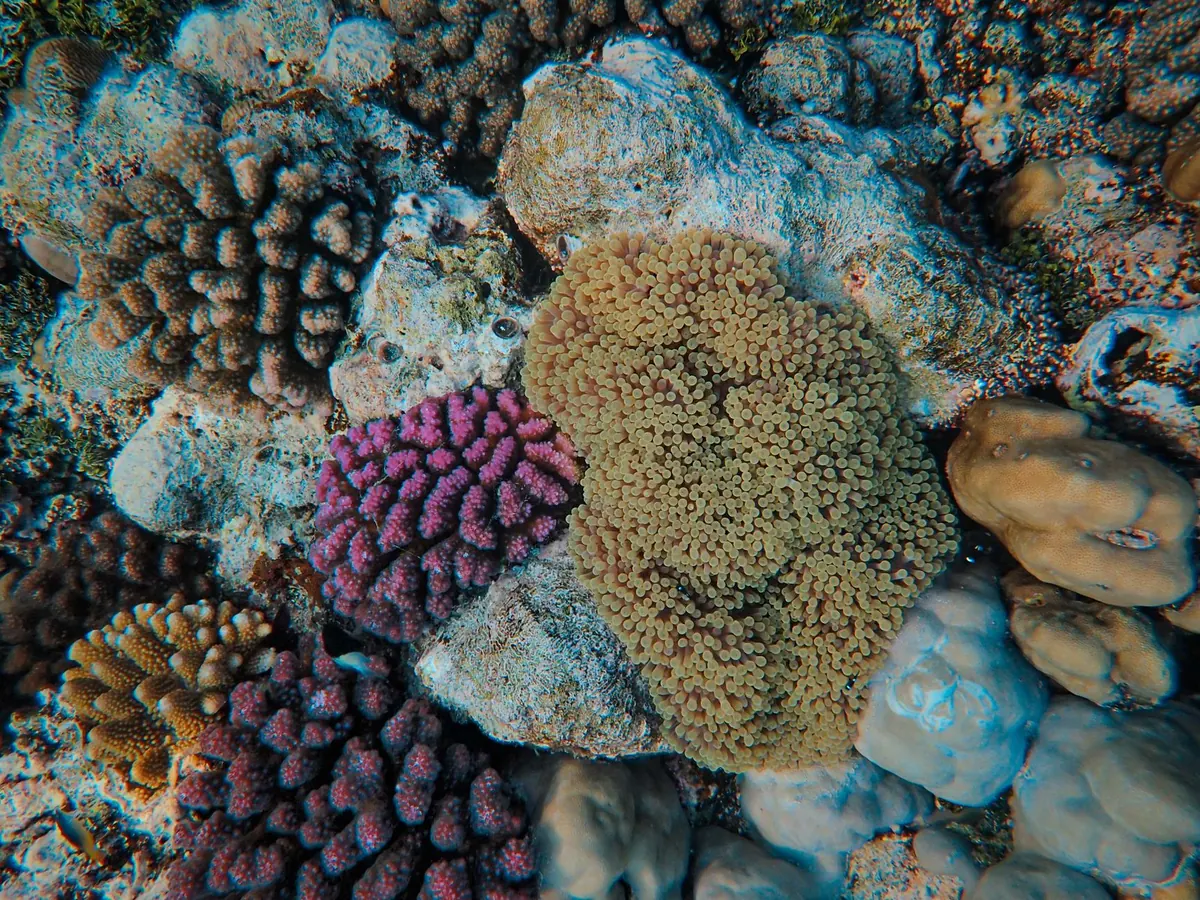
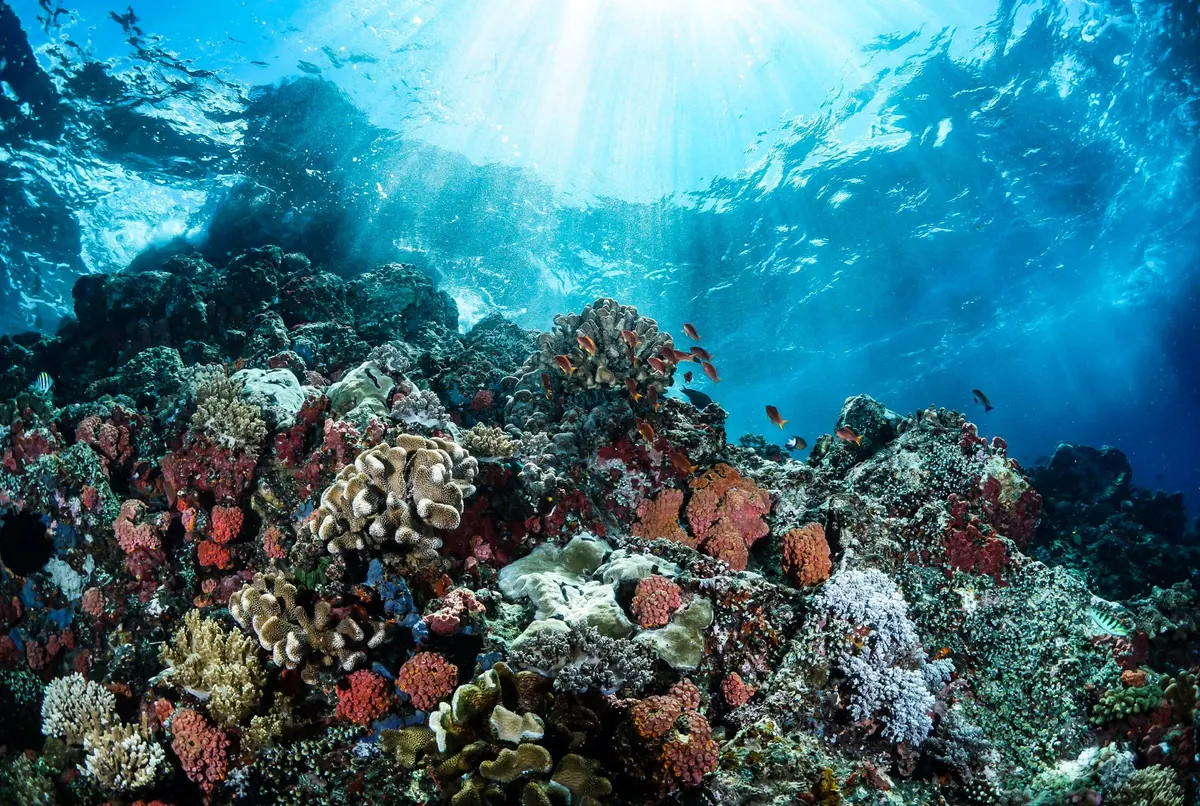
A healthy reef is loud. It crackles with snapping shrimp, hums with fish traffic, and looks like a city built from stone and colour. Then a run of still, cloudless days arrives, the sea warms by a degree or two, and within a few weeks that same reef turns a ghostly white. The corals are often still alive. Something inside them has gone badly wrong.
Bleaching gets reported as though corals were simply cooked. The reality is stranger and more interesting: a partnership that has worked for hundreds of millions of years, undone by a few weeks of unusually warm water.
What actually turns a coral white
Corals are animals. Each colony is made up of thousands of tiny polyps with tentacles and a mouth, sitting in a skeleton of calcium carbonate — the same limestone family as chalk. Living inside their tissue are single-celled algae called zooxanthellae.
That arrangement is the engine of the reef. The algae photosynthesise and pass sugars and other energy-rich compounds to the coral. In return they get shelter and nutrients from the coral's waste. For many reef-building corals, the majority of their daily energy comes from these tenants rather than from catching food with their tentacles.
The algae also supply most of the coral's colour — the browns, golds and greens that make a reef look alive. When the algae are lost, what remains is the coral's own largely translucent tissue stretched over a white skeleton. That is the white you see in photographs. It is bone showing through skin, not a corpse.
This distinction matters. A bleached coral is stressed and starving, but it is not automatically dead. If the water cools in time, it can take its algae back and recover. While it is bleached, though, it is running on reserves, and it is far more vulnerable to disease.
The mechanism: why heat breaks the partnership
Zooxanthellae are built for a narrow band of conditions. When the water around them sits a degree or two above the usual summer maximum, their photosynthesis starts to run out of balance. The light-driven steps keep firing, while the enzyme-driven steps that fix carbon cannot keep pace. The excess energy has to go somewhere, and some of it ends up as reactive oxygen molecules that damage the algae and the coral cells around them.
The coral's response is to evict the damaged algae — or the algae simply die in place. Either way, the coral loses both its colour and its main food supply in one move.
Why a hot, still, clear spell is the worst combination
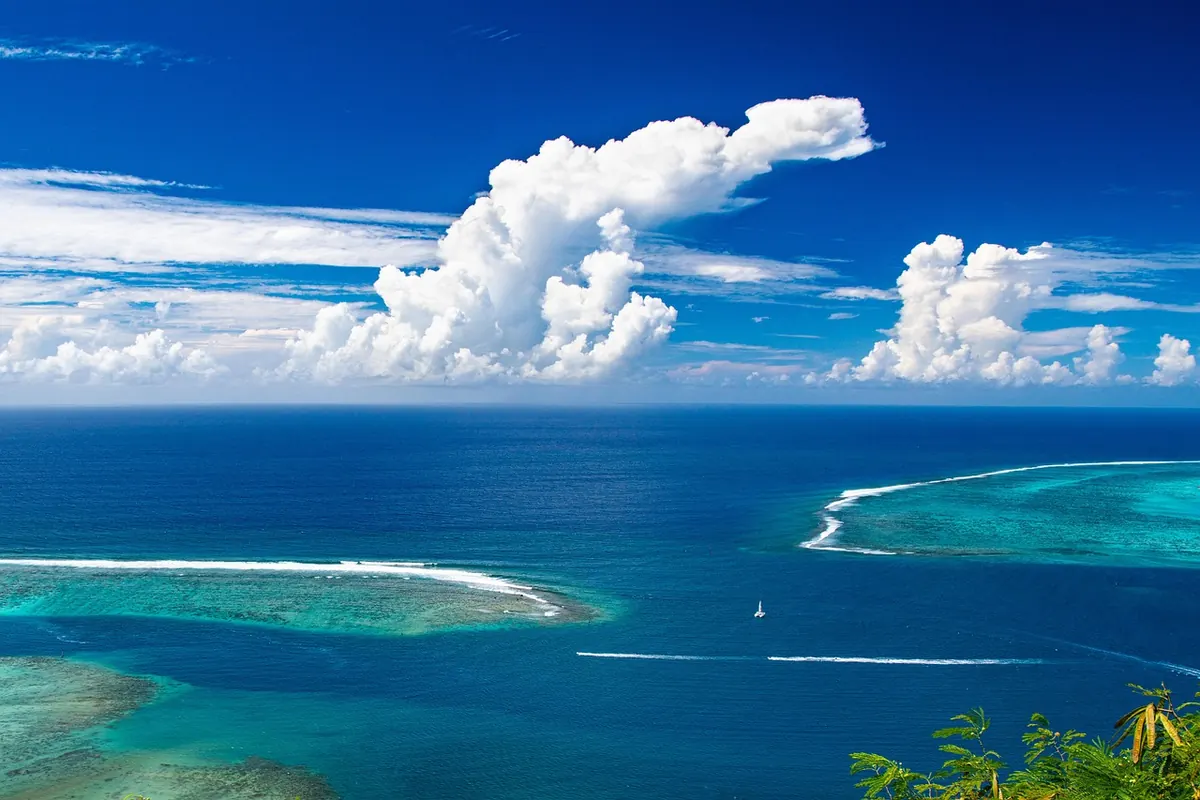
Temperature is only part of the picture. Bright sunlight pours energy into the same system that is already struggling, which is why bleaching often follows calm, cloudless weather rather than simply the hottest day. Still water makes it worse: without wind and currents mixing the surface layer, heat builds up in the top few metres where most reef-building corals live. Cloud cover, a breeze, or a passing storm can buy a reef valuable days.
Duration matters as much as the peak
A brief spike of warm water is usually survivable. Weeks of it are not. Researchers tend to think about bleaching risk in terms of accumulated heat exposure rather than one record temperature, which is why the length of a marine heatwave is often more important than its highest reading. Cool nights, local upwelling of deeper water, and strong tidal flushing all interrupt that accumulation, and reefs that get them tend to fare better.
Not all bleaching starts with heat
Thermal stress is the biggest driver on a global scale, but corals bleach for other reasons too — and these often stack on top of temperature stress:
- Cold snaps. Unusually cold water can shock corals in much the same way, particularly in shallow bays and on reefs at the edge of their range.
- Fresh water and runoff. Heavy rain can drop salinity sharply near the coast, and the sediment it carries smothers and shades corals.
- Poor water quality. Excess nutrients encourage algae and can tip the balance against corals, while pollutants add another layer of stress.
- Disease. Bacterial infections can strip tissue and leave pale patches that look like bleaching from a distance.
- Low tides and exposure. On extreme spring lows, shallow corals can be left in the air under direct sun.
- Sediment and physical damage. Anchors, boat groundings, storms and careless fin kicks all create injuries that cost energy to repair.
Ocean acidification belongs on the same list, though it works differently: it does not usually bleach a coral directly, but it makes building and rebuilding a skeleton harder, and it slows recovery after a bleaching event.
Why two reefs can look completely different in the same heatwave
Drive between two reefs a few kilometres apart after a hot summer and you may find one white and one still coloured. That patchiness is normal, and it comes down to a handful of factors.
Species and shape matter. Fast-growing branching corals such as staghorn and table corals bleach early and often die, while massive, slow-growing corals like brain corals and Porites boulders tend to hold on longer. Location matters too: shallow, enclosed lagoons heat fastest, while reef slopes facing currents stay cooler. Turbid water can shade corals from light, which sometimes helps in the short term even as it harms them in other ways.
History plays a part as well. Corals in a reef that has bleached before may carry some tolerance, or the community may have already shifted towards tougher species — which is better for survival but poorer for the reef's complexity and the fish that depend on it.
What happens after a bleaching event
Recovery is possible if the water cools within a few weeks. Remaining algae in the coral's tissue, or new ones picked up from the surrounding water, can multiply and restore colour over a period of weeks to months. But recovery is not just about colour returning. Bleached corals grow more slowly, produce fewer eggs, and are more likely to succumb to disease in the following year.
When bleaching is severe or prolonged, corals die. The skeleton stays for a while, so the reef still looks like a reef from the surface, but the living skin is gone and turf algae move in. Many fish that live only among live branching corals disappear, and the structure itself begins to erode without the animals that maintain it. Full recovery can take a decade or more — and repeated heatwaves shorten the gaps between events until there is no time to recover at all.
What actually helps
Global heating is the force behind the rising sea temperatures driving mass bleaching, and that is a problem no reef manager can solve locally. But local pressure and global heat interact, and reducing the local burden gives corals a better chance of surviving the next hot spell.
- Protect water quality. Support better sewage treatment and reduced runoff in your area, and avoid fertiliser and chemical use that drains towards the coast.
- Leave reefs alone underwater. Good buoyancy, no touching, no standing on coral, and no anchoring on reef. A single broken branch is energy the colony cannot spare.
- Support no-take areas. Fish populations, especially herbivores such as parrotfish, keep algae in check and help reefs recover after a bleaching event.
- Report what you see. Reef monitoring programmes rely on divers and snorkellers logging bleached coral. Your photographs and location notes are genuinely useful.
- Cut emissions where you can. It is the least immediate action and the most important one.
Bleaching is a symptom, not the disease. Understanding the mechanism — algae evicted from a starving animal because warm water made photosynthesis dangerous — makes the prognosis clearer, and it makes the case for acting on both the local and the global front at once.
Photo: Francesco Ungaro / Pexels